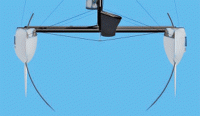
Dinghy Design: Open 60 influence?

2) The idea of taking two equal boats like 29'ers or 49ers and replacing the normal foils on one with curved foils is a formula for failure of the curved foils since all their advantages are not being exploited. The T2 uses the foils in a manner that allows a fairly narrow ,low wetted surface, lightweight hull.


Doug, I am reluctant to reenter the discussion at this point, but you have just entered my area of expertise when it comes to the analyzing process of one part against another and by extension, how efficiently it might be built in a production scenario.

Does not two boat testing with identical hulls make sense to you in order to sort out the differences that may be provided by the design separation of which you speak? Go ahead and use your Tantra? to run a test, but there are several other properly configured dinghies out there that are obtainable for next to nothing that could be more than suitable and will rapidly allow a grouping of analytical data points to determine the potential.

Right now, it would seem that you are shifting analysis possibilities in order to support the argument. Serious analysis proponents would tell you that once you shift the discussion and the elements, you have made necessary a whole new set of data points. If you do not have a pair of T's from which a proper and credible analysis can be drawn, then you look for the next best set of data point producing subjects to get something that might indicate the possible success of the hypothetical suggestion you make. From that you may, or may not proceed, but without the correctly produced data, you are simply guessing as to the possibilities


The suggestion to use two identical boats evidences a failure to recognize the nature of these foils and how they can best be used in a dinghy design.

Are you saying that it is better to have two non-identical boats for this process? I am afraid that you have left the realm of science in the process and entered the realm of something else if you think that two nonidentical boats equipped with different setups will yield supportable data.


I think the Tantra II is probably a good choice for a proto because it is not the highest performance design possible using curved foils but , rather, is a "performance daysailer" that will perform very well while still being able to provide "amenities" for daysailing like a molded in cooler and dry stowage compartment big enough to carry a small tent. Further, it illustrates how a boat using "foil assist" can be more that just a performance machine-it can use innovative design to bring much more to the table: an easy to sail, beach sailable, shallow draft dinghy capable of excellent performance in a wide range of conditions while offering comfort not available in any current boat capable of the performance of the T2.

Are there any T1's on the planet that are capable of being modified and from which to draw conclusions, or is this a supposition based on something that existed years ago and is not available now? The answer, of course, is to build two T1's with the same configuration and equip one of them with the curved foils and then test them side by side in order to gather proper, equivalent data for comparison. Nothing like the present to build the paired craft and run the tests with full understanding that they may not yield the data you seek. I know this from years of building test modules of this sort and finding that the original assumptions were faulty and that the product had no future as a manufactured item.


It's an exciting concept that has a great deal of potential.

Right now, it has no potential and I am sorry to say that here on Boat Design. You have made assumptions. These assumptions have not been proven through standard means and at present, they are not able to be reproduced. What you have here is a collection of assumptions based on things that are not of the type that manufacturers seek before they tool-up in a prototype process, much less a full build.

You have said that this boat is not for home builders and that is what originally made it a non-issue for me and my interests. Now, it looks like the boat is also a non-manufacturable entity. It shall remain that way based on my experience in the field until a satisfactory prototype has been built and successfully tested against an identical design without the proposed changes.

At this point, I am out of the discussion based on both points of interest. No reasonably interested average person can build this boat outside of a factory and there is no proof that such a boat could work, even if it were built by a qualified factory.

Thank you for your time, Doug, but this is a dead end for me as I suspect it is for others who have been reading along with interest.
 
Thanks for your comments, Magnus. I have been involved in design ,building and testing of boats for over 50 years and believe that I am qualified to design a development program for a new boat which I have done several times in the past. Based on your comments I think you may have missed the highlighted sections of the post below:


==========
1) What you fail to understand is that there is no existing hull that I believe would illustrate the potential of this design concept. I'm afraid that you're stuck on finding out whether the foils work or not. I'm not -I know they will work and demonstrating their effectiveness in a boat designed specifically for them is the best way to proceed. The resulting prototype can be(and would be) raced against other boats in the same size range with similar capabilities. But there is more to this than you appear to understand: the foils permit the boat to carry more sail area than a conventional design which is one of the most important reasons to build a prototype. Further, the foils allow a unique type of boat that can have features no other boat of this performance capability has. To illustrate the full range of innovation in the T2 nothing would be suitable but a purpose designed prototype. Once the prototype proves satisfactory a second prototype would need to be built to fully refine the design. In my opinion this is ,without a doubt, the best way to develop a concept like the T2 with the exceptional level of innovation present in the design.--.
 
T2 Curved foils compared to Nacra Catamaran Curved Foils

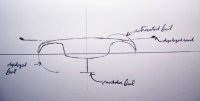
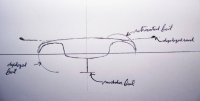
Here is an illustration showing the Nacra 20 foils and their curvature and the rough sketch of the proposed dinghy foils for the T2. The biggest difference is that the dinghy foils have more curvature and, hence, more vertical lifting area as a percentage of total foil lift. From a design standpoint curved foils offer a wide range of options that allow them to be tailored to a specific design:

(click on image)
 

Attachments

  • Nacra 20 foils btdt.gif
    Nacra 20 foils btdt.gif
    35.9 KB · Views: 891
  • Tantra II 003.JPG
    Tantra II 003.JPG
    110.1 KB · Views: 694
It seems a bit harsh to say the idea has no potential but perhaps Doug has underestimated some of the challenges of actually going from a design idea to a working example.

Back in the design space for a minute, what part of the concept represents the "exceptional level of innovation" claimed above? How are these curved boards meaningfully different from bruce foils used to stabilise experimental vessels as shown in the AYRS for decades? I know the curved boards theoretically go up and down in a trunk differently to a straight board but why is the curve significant? Is it just that it allows an inboard retraction pull? Is it that curved boards avoid a greater total beam when retracted? Is it that it allows the reduction in lifting area before a reduction in lateral area? Doug - do you believe there are benefits to curved boards compared to bruce foils beyond those listed above?

If not, do these are these factors add up to a good enough reason to go through the added complexity of creating a curved boards and cases instead of straight inclined boards?
 
Last edited:
Tantra II / curved lifting foils

See page 8 for a summary of the princible design concepts of the T2 and more on the curved lifting foils.
 
Last edited:
Doug, you're all over the shop. What about those numerous other designs and models you were getting revved up about? Jeez man, pick one and begin bloody work on it. We're interested with what you produce ... but everyone has gone to sleep on the screeds of figures and high flying proclamations. Not insulting you ... just want some real activity.
 
Dinghy Design: Open 60 influence? / Tantra II

Doug, you're all over the shop. What about those numerous other designs and models you were getting revved up about? Jeez man, pick one and begin bloody work on it. We're interested with what you produce ... but everyone has gone to sleep on the screeds of figures and high flying proclamations. Not insulting you ... just want some real activity.
=============
I'm building the SRT model now-and have a thread about my progress in multihulls. Will have the first results in a month or so I hope. That hull will test numerous ideas as is described in detail in the thread. I wish I could go faster but.......
How's your 24 coming along?
--
I'm not going to build the Tantra II for a long time but someone else may. I am going to continue developing the basic concept and may do a final design. You reminded me about numbers-I have done very little preliminary numbers crunching with this thing- just enough to know the basic potential-- I'll have to take care of that. Thanks.

PS- did you see the stuff I posted from Greg Ketterman on the "reverse curve foils"?
 
Sort of been following this thread. Haven't understood it from the beginning. Can't really believe that the mechanics of handling 2 boards on a high performance dinghy would be feasible.
Saw this on SA yesterday. A quote from Bob Hodges from the A cats.

It appears that light air performance is not negatively impacted and upwind and downwind performance as the breeze builds is certainly improved. The curved boards reduce the righting moment of the platform forcing a more physical and dynamic sailing technique and what has evolved from this is sailors starting to use their trapezes downwind in over 10 knots of breeze.

Now I also cannot understand why it would be a positive to reduce RM on a performance dinghy by adding curved boards.
 
Dinghy Design: Open 60 influence? / Tantra II

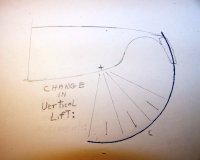
Rough illustration of the approximate variation of vertical lift with incremental board retraction :

(click on image)
 

Attachments

  • Curved Foil Lift 004.JPG
    Curved Foil Lift 004.JPG
    156 KB · Views: 794
Now I also cannot understand why it would be a positive to reduce RM on a performance dinghy by adding curved boards.

==============
Sean, thanks for the comment. The curved lifting foil reduces RM on a multihull because the center of lift of the foil is inboard of the center of buoyancy of the lee hull which results in reduced righting moment-and a small amount of vertical lift.
On the T2 concept the center of lift of the foil is outboard of the center of buoyancy of the hull resulting in increased righting moment along with vertical lift. Further, the curve of the T2 foil is tighter with more foil area used for vertical lift.
The T2 concept is a "performance daysailer" not a high performance skiff type dinghy although the foils will allow very good performance throughout the wind range. Because of the fact that the curved foils increase RM substantially on this design it will be able to carry more sail than would a comparable boat without the curved foils.
--
Handling twin foils won't be a problem-its done on scows all the time and singlehanded on Open 60's, mini's and high performance cats and tri's.
 

Attachments

  • Tantra II 003.JPG
    Tantra II 003.JPG
    110.1 KB · Views: 506
  • Nacra 20 foils btdt.gif
    Nacra 20 foils btdt.gif
    35.9 KB · Views: 564
Doug, that is a long response but I don't think it really answers the questions that I put to you:

============
1) The entire concept of a "performance daysailer" is relatively unique. The Tantra II represents a type of performance monohull daysailer never seen before since it uses foils for lift-"foil assist"- on a boat that has a molded in cooler and molded in dry stowage.
:

So the innovation is in combining molded in storage with a daysailer with foils? Seriously?

============

The boat uses a sliding bench seat for fast, very comfortable movable ballast(crew). Because of the curved lifting foils ,and their placement due to the unique hull design, the boat can carry more sail area than it could without them. The unique rig features a square top main and square top "ribbon jib" that allows for an exceptionally powerful sail plan with the CE lower than equivalent "normal" fractional rig. The rig would also permit the use of an asymmetrical spinnaker. The boat uses a reverse curve traveler, which is actually a combination of vang and mainsheet, to allow the sheet to come from forward and eliminate any possibility of line getting in the way of the tiller or extension tillers. Using a variant of the sheeting system on the Swift Solo the main and jib are controlled with one sheet. The rudder is mounted in a retractable gantry which allows the whole boat to be shorter for trailering and stowage while permitting a very generous "footprint"( the distance between the main foils and rudder foil) that enhances pitch stability. Masthead flotation, as part of the rig structure, prevents the boat from turtling in a capsize.
--
2) The curved foils are used in this application( a performance daysailer monohull) to lift the boat and because of the unique hull design they also add righting moment and take care of lateral resistance. Because they are used in conjunction with a rudder t-foil the boat will be very stable in pitch. The foils allow approximately 80% of the weight of the boat to be supported on one foil without requiring any form of altitude control. It is also possible that downwind the with the two main foils deployed that they would act like surface piercing foils allowing the whole boat to fly-though the degree to which that is possible(or desirable) is 100% adjustable. The curve is very important for shallow draft and for maximising the amount of vertical lift in a way that allows the lift profile to be infinitely adjusted in a way impossible with a t-foil or straight angled foil. Small vertical adjustments of the board can produce significant changes in the lift profile of the foil.
They are also fully retractable allowing the boat to be beach sailed. Because of the design of the foil support structure(molded in leeboard) the boat will be able to be sailed upwind with the foils completely retracted. Using a system similar to the A Class DNA the curved foils can be simply adjusted for
angle of incidence. Using a system similar to Steve Clarks Aethon the foil heads can be adjusted athwartship to further augment changes to the lift profile of the foils and finally on the prototype(s) the amount of foil toe-in will be adjustable.
See posts 65-68.
---
Preliminary Specs:

Tantra II
--LOA-15.5'
--Beam- 8.75'(pods fold to trailerable width)
--Sail Area-150sq.ft.+ asy-spin
--Draft-1.17'( 14" )
--Weight- 175lb
--Crew- 1-2
--Molded in leeboards serve as the support structure for the lifting foils and also permit sailing off a beach upwind with the lifting foils fully retracted
--Sliding Bench Seats
--Fully adjustable, retractable, curved lifting foils
--Retractable Rudder Gantry
--Wing Tip Rig RJ(ribbon jib)
--Reverse Curve Traveler
:


I also don't see how the use of the curved foils is meaningfully different from Bruce foils. You say the curve is "very important" but don't explain why straight foils couldn't do the same job.

The variable lift angle that you get with a curved board only applies if you adjust the immersion of the board. Given that it will be all but impossible to do under load this is only something you could do on the windward side and the effect would not be felt until the boat tacked. By integrating some form of adjustment you could probably do the same with a straight board anyway.

Shallow draft is nice but not revolutionary nor unachievable with a straight board or an L board. I doubt many sailors would be willing to risk an inevitably expensive vessel by sailing in waters that are only just deep enough. Collision with a sand bar is sure to cause major damage, particularly as the tips of curved boards could impart huge torsion on the case and top of board.

Automatic ride height control is a by-product of having angled surface piercing angled foils. As I see it the curved shape would actually reduce the effectiveness of the ride height control as the first area to rise above the surface is the most vertical and therefore has the least impact on reducing lift. A standard straight board would be more effective I think.

I don't deny that curved boards are proving effective in other classes by the way, but I don't see why they contribute anything particularly special to this latest concept.

Is there any more to it than this or will this concept join the long list of ideas/bandwagons which you have become excited about and then moved on from before verifying that the claims you make for it are actually real?
 
So the innovation is in combining molded in storage with a daysailer with foils? Seriously?

The groundbreaking innovation is that the concept include a foil component that theoretically contributes vertical lift. Some fractional potential contribution of vertical lift by a foil is the principal criteria by which our hero assigns innovation brownie points. Every one of our favorite foiling friend's enthusiasms from models to Hydroptere meet this criteria.

I also don't see how the use of the curved foils is meaningfully different from Bruce foils. You say the curve is "very important" but don't explain why straight foils couldn't do the same job.

The variable lift angle that you get with a curved board only applies if you adjust the immersion of the board. Given that it will be all but impossible to do under load this is only something you could do on the windward side and the effect would not be felt until the boat tacked. By integrating some form of adjustment you could probably do the same with a straight board anyway.

Shallow draft is nice but not revolutionary nor unachievable with a straight board or an L board. I doubt many sailors would be willing to risk an inevitably expensive vessel by sailing in waters that are only just deep enough. Collision with a sand bar is sure to cause major damage, particularly as the tips of curved boards could impart huge torsion on the case and top of board.

Automatic ride height control is a by-product of having angled surface piercing angled foils. As I see it the curved shape would actually reduce the effectiveness of the ride height control as the first area to rise above the surface is the most vertical and therefore has the least impact on reducing lift. A standard straight board would be more effective I think.

I don't deny that curved boards are proving effective in other classes by the way, but I don't see why they contribute anything particularly special to this latest concept.

All your rational commentary will be ignored, disputed or go without reasoned response. There will be a numbered list posted containing no substance, references to previous posts by the same responder containing no substance and your motives will be questioned and your knowledge and experience doubted.

Is there any more to it than this or will this concept join the long list of ideas/bandwagons which you have become excited about and then moved on from before verifying that the claims you make for it are actually real?

Yes.

Yawn. Thursday.

--
CutOnce
 
Doug, that is a long response but I don't think it really answers the questions that I put to you:


So the innovation is in combining molded in storage with a daysailer with foils? Seriously?


I also don't see how the use of the curved foils is meaningfully different from Bruce foils. You say the curve is "very important" but don't explain why straight foils couldn't do the same job.

The variable lift angle that you get with a curved board only applies if you adjust the immersion of the board. Given that it will be all but impossible to do under load this is only something you could do on the windward side and the effect would not be felt until the boat tacked. By integrating some form of adjustment you could probably do the same with a straight board anyway.

Shallow draft is nice but not revolutionary nor unachievable with a straight board or an L board. I doubt many sailors would be willing to risk an inevitably expensive vessel by sailing in waters that are only just deep enough. Collision with a sand bar is sure to cause major damage, particularly as the tips of curved boards could impart huge torsion on the case and top of board.

Automatic ride height control is a by-product of having angled surface piercing angled foils. As I see it the curved shape would actually reduce the effectiveness of the ride height control as the first area to rise above the surface is the most vertical and therefore has the least impact on reducing lift. A standard straight board would be more effective I think.

I don't deny that curved boards are proving effective in other classes by the way, but I don't see why they contribute anything particularly special to this latest concept.

Is there any more to it than this or will this concept join the long list of ideas/bandwagons which you have become excited about and then moved on from before verifying that the claims you make for it are actually real?

I think a good alternative would be an esky on a hobie 16......
 
Forum posts represent the experience, opinion, and view of individual users. Boat Design Net does not necessarily endorse nor share the view of each individual post.
When making any potentially dangerous or financial decision, always employ and consult appropriate professionals. Your circumstances or experience may be different.

  • Back
    Top