
The Boat Design & Boatbuilding Site
Install the app
How to install the app on iOS
To install this app on your iPhone:
- Tap the Share button at the bottom of Safari.
Tap ... if Share is not visible, then Share - Tap Add to Home Screen
Tap View More and scroll down if needed to see Add to Home Screen, then Add to Home Screen. - Tap Add on the top right to confirm.
Note: This feature may not be available in some browsers.
You are using an out of date browser. It may not display this or other websites correctly.
You should upgrade or use an alternative browser.
You should upgrade or use an alternative browser.
infusing groove cut foam
- Thread starter Tungsten
- Start date

jorgepease
Senior Member
- Joined
- Feb 12, 2012
- Posts
- 1,620
- Reaction score
- 51
- Location
- Florida
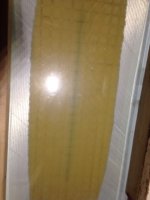
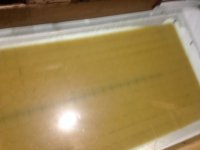
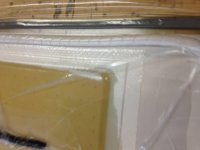
Nice, first time I see an infusion using grooved foam. It's what I want to try next. You save so much plastic too flow media and per film.

groper
Senior Member
- Joined
- Jun 18, 2011
- Posts
- 2,507
- Reaction score
- 175
- Location
- australia
Less resin total perhaps, but more stays in th panel so slightly heavier. Unless the panel is extremely weight critical, the the grooved foam is by far the best option... I did the entire cabin top of my boat and maybe the floor too- can't remember now- and the infusions were really easy, quick to setup, less plastic waste in the bin, etc etc it's just better all round... Over here the difference in price for the grooved foam vs plain sheets is only a few dollars per sheet... So it's a no brainer really unless your building a full on race boat where your trying to save every ounce of unessesary weight... On a large boat the difference could be hundreds of kilos...
jorgepease
Senior Member
- Joined
- Feb 12, 2012
- Posts
- 1,620
- Reaction score
- 51
- Location
- Florida
So your feed was on the perf only side?
groper
Senior Member
- Joined
- Jun 18, 2011
- Posts
- 2,507
- Reaction score
- 175
- Location
- australia
The spacing of the grooves is either 20 or 25mm- can't remember which and I can't measure it as all my surfaces are painted over now... The width and depth of the grooves was probably around 1.5mm x 1.5mm from memory. Multiply it all out to arrive at a volume per square meter. Then multiply this out by the density of your resin and you will know the weight increase per meter... I did all this back in the day and from memory it added about 10% weight to the finished panel assuming a 600-800gsm laminate each side of a 15mm thickness core. Considering my boat has about 2 tonnes of cored panel in total, it would have been 200kg heavier than using flow media - that's more than the weight of an engine... So it is significant, but unless outright performance is a key design criteria, the infusions were a lot easier using the grooved foam.
The percentage weight increase is not ss extreme if the panels are heavier laminates or thicker cores as the amount of extra resin stays the same but is proportionally less than the total. So you won't notice the difference as much on panels that are say, 25mm thick with 2000gsm laminates both sides.... If that's what the design needs, then going to grooved foam might only add about 3% to the total weight if you get what I mean? You can plug all this into a spreadsheet and it will do all the math for you... But lightweight racing sailboats typically use around the 600gsm per side laminate weight so the difference is significant. If the panels were for a large ocean going motor yacht built to survey with massive laminates and higher density foam cores, the weight gain would be insignificant for example... The benefit of easier infusions would allow significant cost savings for the builder tho. The flow modelling doesn't have to be a accurate and the resin line placements are not so critical with the grooves so the probability of dry spots is lower and setup time is quicker to name some of the benefits...
The percentage weight increase is not ss extreme if the panels are heavier laminates or thicker cores as the amount of extra resin stays the same but is proportionally less than the total. So you won't notice the difference as much on panels that are say, 25mm thick with 2000gsm laminates both sides.... If that's what the design needs, then going to grooved foam might only add about 3% to the total weight if you get what I mean? You can plug all this into a spreadsheet and it will do all the math for you... But lightweight racing sailboats typically use around the 600gsm per side laminate weight so the difference is significant. If the panels were for a large ocean going motor yacht built to survey with massive laminates and higher density foam cores, the weight gain would be insignificant for example... The benefit of easier infusions would allow significant cost savings for the builder tho. The flow modelling doesn't have to be a accurate and the resin line placements are not so critical with the grooves so the probability of dry spots is lower and setup time is quicker to name some of the benefits...
Jim Caldwell
Senior Member
- Joined
- Aug 16, 2013
- Posts
- 267
- Reaction score
- 8
- Location
- Cleveland, Ohio
So how heavy was the house. LOL
I think my math was right,i was doing it in metric which was messing me up,switched to imperial using 62lbs a cubic foot for epoxy.16 g a sq/ft so x 10.7 =171 gsm.Really nothing at all considering the green flow mesh wastes some 428 gsm.
groper
Senior Member
- Joined
- Jun 18, 2011
- Posts
- 2,507
- Reaction score
- 175
- Location
- australia
i checked my records - for the diab foam i had, the groove spacing was 20mm. The groove size is 2mm x 2mm so the panel weight increase was 440grams per square meter.
Im not sure if the groove sizes and profiles can be tailored and how much they differ between manufacturers....
Im not sure if the groove sizes and profiles can be tailored and how much they differ between manufacturers....
rob denney
Senior Member
- Joined
- Feb 13, 2005
- Posts
- 992
- Reaction score
- 404
- Location
- Australia
i checked my records - for the diab foam i had, the groove spacing was 20mm. The groove size is 2mm x 2mm so the panel weight increase was 440grams per square meter.
Im not sure if the groove sizes and profiles can be tailored and how much they differ between manufacturers....
I've got some Divynicell which is 1mm wide x 3mm deep, on 20 mm centres. We also used some 1 x 1. It worked with 400 db, with local reinforcing of 1600 each side. Bit scary as it would not take much to block it, so definitely run over it with a vacuum cleaner once it is on the table. And do a sample piece before a big job.
It might be the foam in the vid at http://harryproa.com/?portfolio=solitarry-50 although this looks bigger than the 1 x 3 piece in the garage, so maybe it is 2 x 2.
Not sure where it came from, seem to remember it was from Sydney. Been a few changes in foam suppliers since then, but I am pretty sure ATL will cut it to whatever you want, if they can get a thin enough blade.
Forum posts represent the experience, opinion, and view of individual users. Boat Design Net does not necessarily endorse nor share the view of each individual post.
When making any potentially dangerous or financial decision, always employ and consult appropriate professionals. Your circumstances or experience may be different.
When making any potentially dangerous or financial decision, always employ and consult appropriate professionals. Your circumstances or experience may be different.
Advertisement:
Similar threads
- Replies
- 4
- Views
- 3,632
- Replies
- 53
- Views
- 10,702
- Replies
- 4
- Views
- 3,106

- Replies
- 44
- Views
- 14,239
- Replies
- 20
- Views
- 12,114