brian eiland
Senior Member
- Joined
- Jun 3, 2002
- Posts
- 5,605
- Reaction score
- 330
- Location
- St Augustine Fl, Thailand
Hummingbyrd 62 Powercat
...here was my initial reply
I thought I would present the case for smaller vessels, and shallow draft vessels.
Let me precede this opinion of mine by stating that in the past I have lived aboard a 60 foot Chris Craft power yacht and a 47 foot sailing craft for 2 & 3 years respectively. I've moved up and down the east coast, cruised the Bahamas for 8 months, sailed down to St Thomas and St Barts on several occasions, and island hopped from Florida down to Venezuela. I also spent 13 years in the boat business on the Chesapeake Bay based out of Annapolis MD.
Most recently I have been exploring the possibilities of moving back aboard a vessel of some sort (maybe even a floating house) with my new wife from Thailand, for that portion of the year we will be spending in the USA. I'm having to brainstorm, what minimum size and type of vessel might meet our liveaboard needs, yet be affordable?? I'm looking at a variety of ideas, and a variety of used boats. I have always been a BIG fan of MotorSailers, and catamaran ones in particular, and if I could afford it I would be very tempted to build one of my own designs. But in reality most of my designs are just a little too big for an owner/operater couple,.... at least bigger than necessary, thus requiring elevated operating expenses, maintenance expenses, and dockage expenses. On the other hand the catamaran hull form does offer several great attributes....shallow draft, greater accommodations within a spacial distribution for privacy in a shorter length vessel,....and level stability that women love (very important).
So what might I recommend for your needs, Mick??
1) First off I would lead you to vessel of less than 60 feet. I think you should consider a vessel size that you can fairly quickly become acquainted with handling yourself. This will inspire your self-confidence to go exploring on your own (you and your wife), without feeling the absolute need for a third party captain. You can take your friends out for an afternoon or weekend cruise without feeling the need for an operator. (I once worked for an owner who specifically ask that I take vacation off the vessel when he came to spend time on the vessel with his wife).
2) As you are brand new to boating I would NOT suggest any sail power, although you may come to appreciate it in the future once you experience it on someone else's vessel. (have a peek at these two videos I just posted recently)
3) I would NOT suggest a new-build (custom project) until you've had a chance to experience some portion of your dream afloat and can make a more informed decision as to your likes/dislikes.
4) I would suggest a nice stable vessel, with a nice house size galley, and a comfortable bathroom (head as it is known). These features are very important for the liveaboard aspect, and they are VERY important for the lady (I'm assuming you really do want to make this dream last for at least 5 years... )
5) I would suggest a vessel with shallow draft and well protected props and shaft systems. The protected props and shafts will save you a lot of heartache and money when you make those few mistakes that many new boaters (and a few older ones as well) make on occasions.
I can't emphasis SHALLOW DRAFT enough. Here I am defining shallow draft as 4 feet or less. The Chesapeake Bay (America's largest inland water bay) has a few navigable deep water channels, but the vast majority of its area is 4.5 feet of water or less on average. If you truly want to explore the Chesapeake Bay and its many tributaries (one of the truly great cruising areas), you better have a shallow draft vessel. Ditto for the Outer Banks of NC (I once did them in a 37 foot sailing cat that I could kick up its CB's and rudders to draft only 24 inches). Its nice to have a shallow draft for the Florida keys, and the 10,000 island area of SW Florida, and those inside waterway passages of the west coast of Florida. Gunkholing is so much fun, and you miss some of this fun when your vessel draws too much water....you end up passing many delightful spots for fear of running aground.
If you are intending to do the east coast, then around Florida, you might well consider doing the popular 'Great Loop', up the Mississippi, to the Great Lakes, down the Erie Canal, etc.
And don't forget the Bahamas that whole chain of islands is structured on a shallow ocean shelf that is a delight to go cruising across rather than around, especially with those crystal clear waters. Shallow draft is king!
I started out to write this posting and make a suggestion of a few possible smaller vessels that I had recently become aware of...several of them being production mono-hulls. But as I read my own words, I can't help but think of this wonderful vessel I just spent a few days aboard in Palm Beach. It was recently purchased by a good friend of mine for his own liveaboard & treasure hunting purposes, so it is not available. I'll present a few details and photos as an example of what I consider a really nice liveaboard cruising vessel that is not too audacious while accomplishing most of what you have in mind plus a few extras...great dive and explore boat.
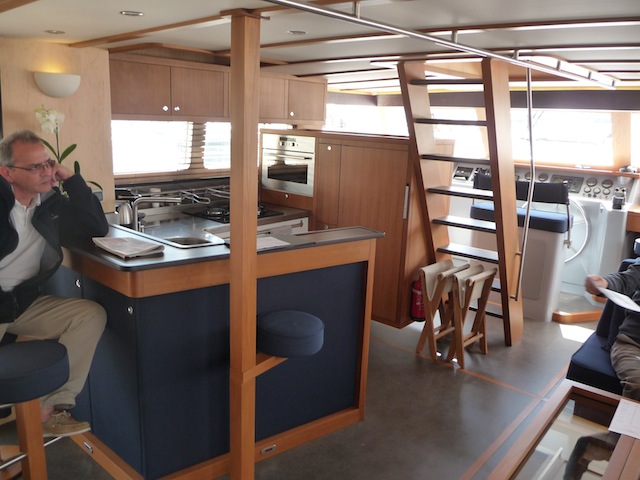
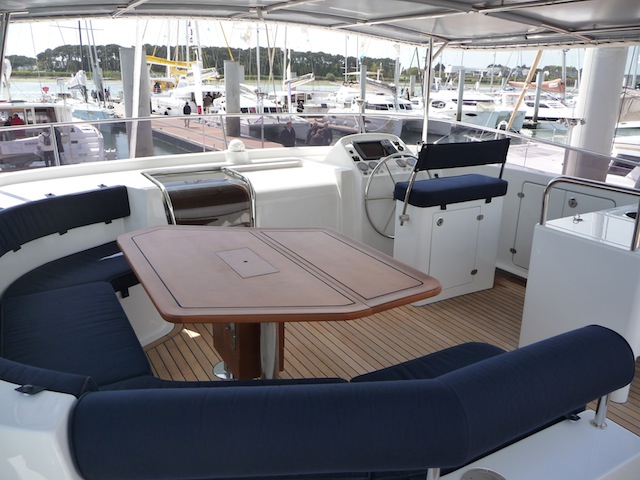
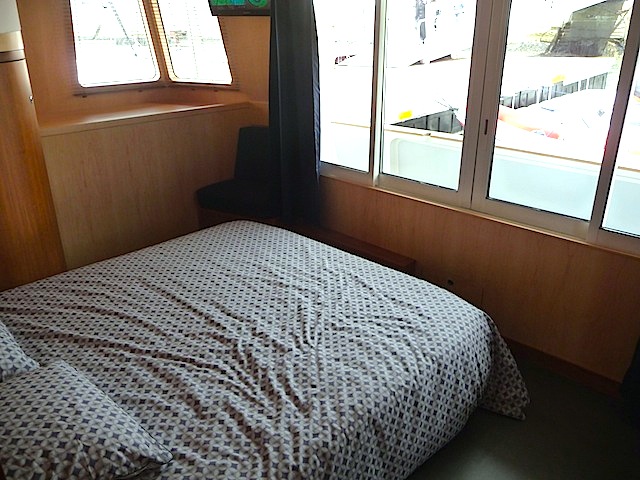
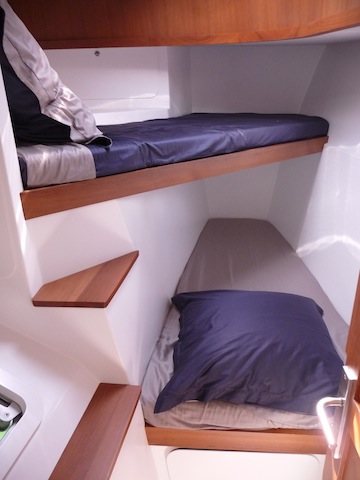
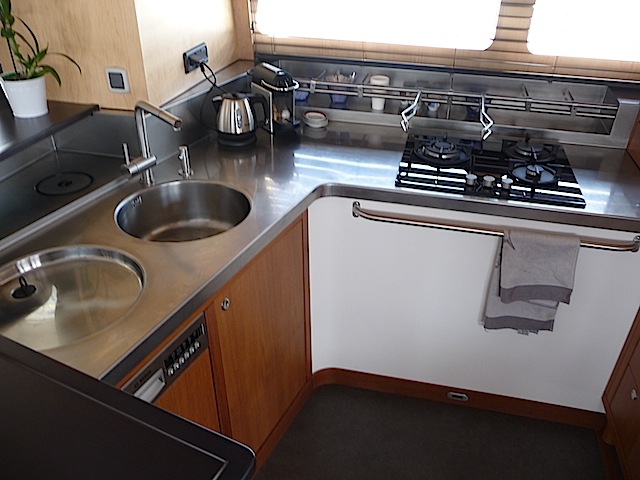
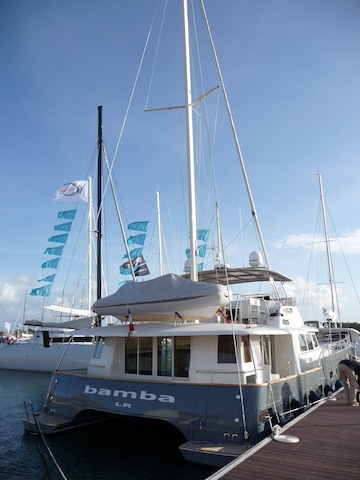
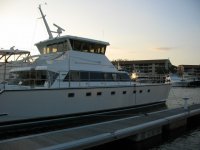
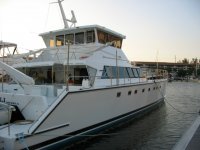
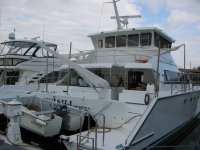
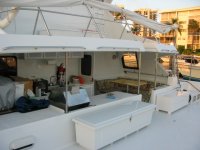
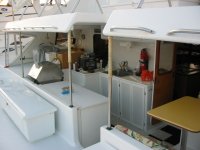
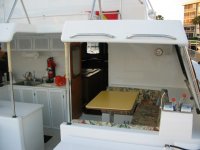
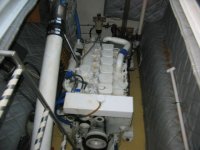
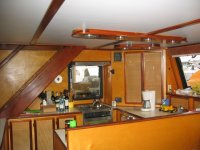
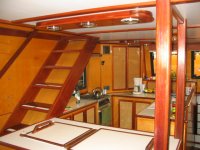
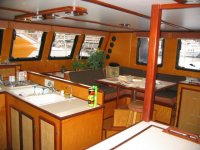
This is a 62' powercat that was custom built by an associate in wood/epoxy/composite. I'll post some pics I took while visiting. Look at the interior room available in this vessel,....and that great galley and big saloon. One master stateroom in one hull, and two guest staterooms in the other. Then how about the great aft deck and its additional galley, outdoor grill, and dining area. This vessel drafts 3.5 feet, and is powered by two 6 cyl Cummins engines of 210HP . It will do 17 knots while using a fraction of the fuel of many yachts this size. It is highly maneuverable with those twin props widely spaced apart. Its easy to get on and off the tender from those swim platforms, and in fact could easily carry two tenders (his and hers), or other water toys. It has a generator and a watermaker, and a highly insulated refrig box and freezer that only requires running one engine once every two days. Its self-sufficient. The cost...less than $1M. I envy his choice.
See what can happen in only 60 feet!! And you and your wife could fully handle this vessel by yourselves.
Regards, Brian
...here was my initial reply
I thought I would present the case for smaller vessels, and shallow draft vessels.
Let me precede this opinion of mine by stating that in the past I have lived aboard a 60 foot Chris Craft power yacht and a 47 foot sailing craft for 2 & 3 years respectively. I've moved up and down the east coast, cruised the Bahamas for 8 months, sailed down to St Thomas and St Barts on several occasions, and island hopped from Florida down to Venezuela. I also spent 13 years in the boat business on the Chesapeake Bay based out of Annapolis MD.
Most recently I have been exploring the possibilities of moving back aboard a vessel of some sort (maybe even a floating house) with my new wife from Thailand, for that portion of the year we will be spending in the USA. I'm having to brainstorm, what minimum size and type of vessel might meet our liveaboard needs, yet be affordable?? I'm looking at a variety of ideas, and a variety of used boats. I have always been a BIG fan of MotorSailers, and catamaran ones in particular, and if I could afford it I would be very tempted to build one of my own designs. But in reality most of my designs are just a little too big for an owner/operater couple,.... at least bigger than necessary, thus requiring elevated operating expenses, maintenance expenses, and dockage expenses. On the other hand the catamaran hull form does offer several great attributes....shallow draft, greater accommodations within a spacial distribution for privacy in a shorter length vessel,....and level stability that women love (very important).
So what might I recommend for your needs, Mick??
1) First off I would lead you to vessel of less than 60 feet. I think you should consider a vessel size that you can fairly quickly become acquainted with handling yourself. This will inspire your self-confidence to go exploring on your own (you and your wife), without feeling the absolute need for a third party captain. You can take your friends out for an afternoon or weekend cruise without feeling the need for an operator. (I once worked for an owner who specifically ask that I take vacation off the vessel when he came to spend time on the vessel with his wife).
2) As you are brand new to boating I would NOT suggest any sail power, although you may come to appreciate it in the future once you experience it on someone else's vessel. (have a peek at these two videos I just posted recently)
3) I would NOT suggest a new-build (custom project) until you've had a chance to experience some portion of your dream afloat and can make a more informed decision as to your likes/dislikes.
4) I would suggest a nice stable vessel, with a nice house size galley, and a comfortable bathroom (head as it is known). These features are very important for the liveaboard aspect, and they are VERY important for the lady (I'm assuming you really do want to make this dream last for at least 5 years...
) 5) I would suggest a vessel with shallow draft and well protected props and shaft systems. The protected props and shafts will save you a lot of heartache and money when you make those few mistakes that many new boaters (and a few older ones as well) make on occasions.
I can't emphasis SHALLOW DRAFT enough. Here I am defining shallow draft as 4 feet or less. The Chesapeake Bay (America's largest inland water bay) has a few navigable deep water channels, but the vast majority of its area is 4.5 feet of water or less on average. If you truly want to explore the Chesapeake Bay and its many tributaries (one of the truly great cruising areas), you better have a shallow draft vessel. Ditto for the Outer Banks of NC (I once did them in a 37 foot sailing cat that I could kick up its CB's and rudders to draft only 24 inches). Its nice to have a shallow draft for the Florida keys, and the 10,000 island area of SW Florida, and those inside waterway passages of the west coast of Florida. Gunkholing is so much fun, and you miss some of this fun when your vessel draws too much water....you end up passing many delightful spots for fear of running aground.
If you are intending to do the east coast, then around Florida, you might well consider doing the popular 'Great Loop', up the Mississippi, to the Great Lakes, down the Erie Canal, etc.
And don't forget the Bahamas that whole chain of islands is structured on a shallow ocean shelf that is a delight to go cruising across rather than around, especially with those crystal clear waters. Shallow draft is king!
I started out to write this posting and make a suggestion of a few possible smaller vessels that I had recently become aware of...several of them being production mono-hulls. But as I read my own words, I can't help but think of this wonderful vessel I just spent a few days aboard in Palm Beach. It was recently purchased by a good friend of mine for his own liveaboard & treasure hunting purposes, so it is not available. I'll present a few details and photos as an example of what I consider a really nice liveaboard cruising vessel that is not too audacious while accomplishing most of what you have in mind plus a few extras...great dive and explore boat.
This is a 62' powercat that was custom built by an associate in wood/epoxy/composite. I'll post some pics I took while visiting. Look at the interior room available in this vessel,....and that great galley and big saloon. One master stateroom in one hull, and two guest staterooms in the other. Then how about the great aft deck and its additional galley, outdoor grill, and dining area. This vessel drafts 3.5 feet, and is powered by two 6 cyl Cummins engines of 210HP . It will do 17 knots while using a fraction of the fuel of many yachts this size. It is highly maneuverable with those twin props widely spaced apart. Its easy to get on and off the tender from those swim platforms, and in fact could easily carry two tenders (his and hers), or other water toys. It has a generator and a watermaker, and a highly insulated refrig box and freezer that only requires running one engine once every two days. Its self-sufficient. The cost...less than $1M. I envy his choice.
See what can happen in only 60 feet!! And you and your wife could fully handle this vessel by yourselves.
Regards, Brian
 ,....what a delight they can be for a cruising lifestyle or live-aboard.