Powered Stabilizers
davidjgray said:
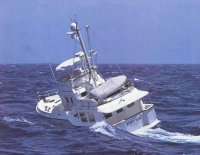
Looks to me like this vessel was performing a roll test, or someone fitted the stabiliser roll sensor back to front which produces a similar effect.David
Actually this photo came from a relatively new magazine "Power Cruising", and was reporting on the Atlantic Rally sponsored by Nordhavn this past summer. This vessel lost electrical power to her Naiad stabilizers.
-----------------------------------------------------------------------
An excerpt: "Mather worked his way to the sea strainer for the primary bilge pump. He removed it and handed it to Sue. As she began cleaning it, she noticed the blockage was odd. Most of the material looked strangely familiar. Then the realization struck: It was shavings and dust from the boat’s manufacture. As Mather worked through the lazarette, the Spencers pieced together the events.
When Uno Mas went over, her port side was momentarily submerged. Seawater forced its way aboard via the engine-room vents, through the lazarette vents on the outside of the hull (which had been plugged with sponges for the passage), and past the lazarette’s hatch gasket in the cockpit floor. The water pushed into tiny spaces never before accessed, collecting construction shavings from the far reaches of the bilge. The primary bilge pump simply couldn’t handle the load. Salt water filled the bilge up to the engine’s oil pan. The high-water alarm sounded, and the large-capacity emergency pump started throwing water overboard. With the primary pump working again, Mather moved farther into the storage space, where he found the inverter fried completely black from its saltwater bath. There was no fire. Relief.
The cooked inverter explained the last part of the mystery. The part’s failure meant
no power was getting to the cooling pump for the Naiad stabilizers, which promptly shut down.
Problems Solved — Not
Uno Mas was not sinking, and she was not on fire. But without stabilizers in a brutal, heamy sea, The
Fearless 40 was more than just uncomfortable; she was downright dangerous. John had the ship aimed into the oncoming wind and waves to minimize the battering while they assessed the emergencies at hand, but that had put them off course.
Any farther afield and Uno Mas wouldn’t have enough fuel to make the remaining distance to the Azores. Getting on course without stabilizers put her at the mercy of a savage sea.
--------------------------------------------------------------------------
If I were to consider electrical drives for stabilizers, I might have a look at the 'new generation' DC motors, and in fact the whole systems approach of smaller 'DC' generators and motors discussed in the Dec/Jan issue of Professional Boatbuilder magazine under an article entitled "Diesel-Electric Technology". Lots of good material to think about.
I also took note of this description, " engine-room vents, through the lazarette vents on the outside of the hull (
which had been plugged with sponges for the passage)". How do the engines breath properly in this situation. I once had one turbo charger fail on a Chris Craft with a couple of big Cat diesels. The exhast gases leaking from the failed turbo quickly filled up the engine room and clogged the too small inlet air vents, which promptly shut down the other engine for lack of good air. Took some time to get the mess cleaned up enough to get back under power. Luck would it the seas were calm out in the Gulf Stream. Sure would not have been pleasant in a northerly.
This reported incident was a serious situation which could have resulted in abandoning the ship for many owners....just another reason I like the concept of motorsailers over trawlers for REAL ocean going boats.
And I'm always amazed by the descriptions of sea state. They call this a 10 to 12 sea. Doesn't look like that to me in the photo....maybe that's the top of the crest to the bottom of the trough, but technically that's twice the average wave height...so wouldn't this be a 5-6 foot sea. terrible to lose your ship in that sea state.


 . I think we are close to the limits for transportability without an escort vehicle, which is where the transport cost start to escalate.


