jlconger
Junior Member
I have been experimenting with using a 3D OpenFOAM CFD model to 'optimize' sail trim. The test case is a J/32 fractional sloop. The CFD model has been calibrated against the performance of the real boat before starting the optimization (https://sites.google.com/site/sailcfd/home/calibration).
The concept behind the optimization was to allow the CFD model to pick the jib and mainsail sheeting angles and sail shape at each point of sail, attempting to maximize either VMG (close hauled) or boat speed (all other points of sail). Essentially the model was allowed to cut new sails as needed for each point of sail - just to see where this would take us. Simulations used moderate wind speeds and flat seas, so controlling boat heel was not a major driver.
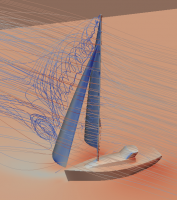
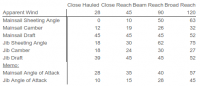
The preliminary results are shown in the attached figures, along with a typical image from the simulation. Some comments:
1) The 'optimum' angle of attack for both sails steadily increases as the apparent wind moves aft.
2) The 'optimum' camber of both sails increases to a point, and then levels off.
3) The draft of the sails was not particularly critical, with very shallow optima. Anything around 45% of chord is fine.
Items 1 and 2 are consistent with the notion that the penalty for sail drag diminishes as the apparent wind moves aft. Increasing angle of attack and camber are moves towards a high lift/high drag foil as the wind angle increases.
More details are available at: https://sites.google.com/site/sailcfd/home/sail-trim-optimization
The concept behind the optimization was to allow the CFD model to pick the jib and mainsail sheeting angles and sail shape at each point of sail, attempting to maximize either VMG (close hauled) or boat speed (all other points of sail). Essentially the model was allowed to cut new sails as needed for each point of sail - just to see where this would take us. Simulations used moderate wind speeds and flat seas, so controlling boat heel was not a major driver.
The preliminary results are shown in the attached figures, along with a typical image from the simulation. Some comments:
1) The 'optimum' angle of attack for both sails steadily increases as the apparent wind moves aft.
2) The 'optimum' camber of both sails increases to a point, and then levels off.
3) The draft of the sails was not particularly critical, with very shallow optima. Anything around 45% of chord is fine.
Items 1 and 2 are consistent with the notion that the penalty for sail drag diminishes as the apparent wind moves aft. Increasing angle of attack and camber are moves towards a high lift/high drag foil as the wind angle increases.
More details are available at: https://sites.google.com/site/sailcfd/home/sail-trim-optimization