Ferrocement hull repair

concrete_floats

New Member
Joined
May 16, 2023
Messages
1
Reaction score
0
Location
SE Asia
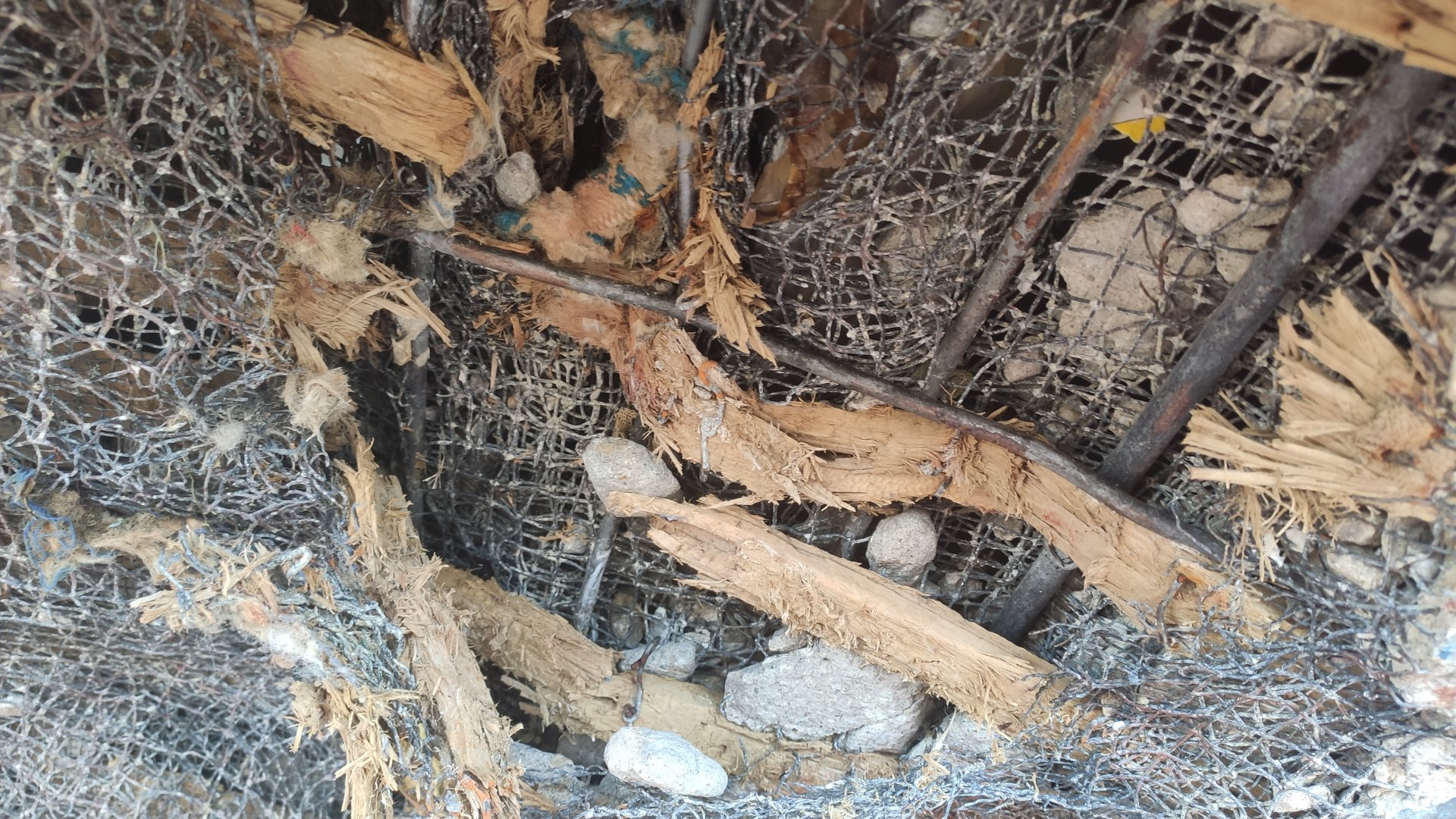
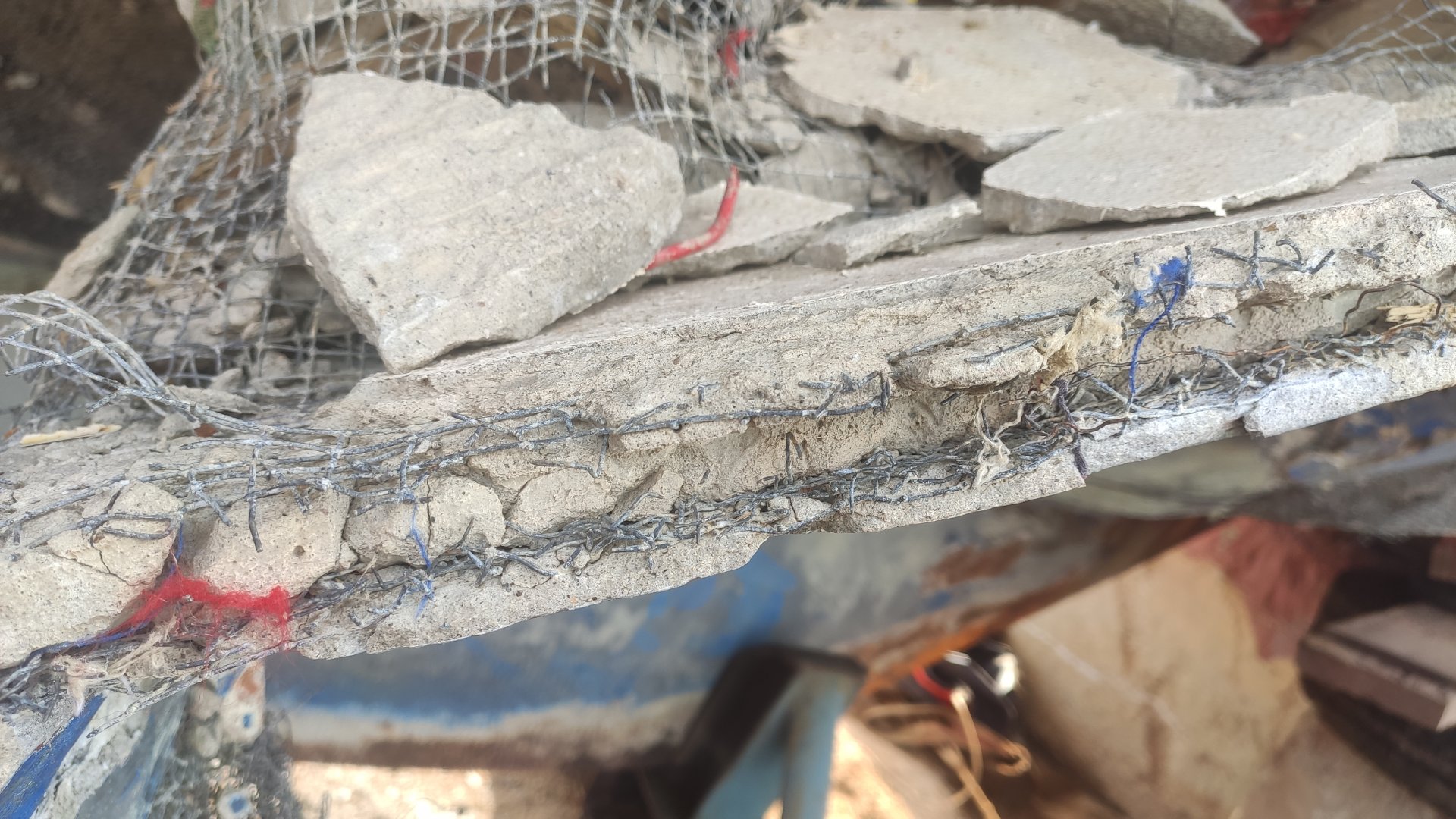
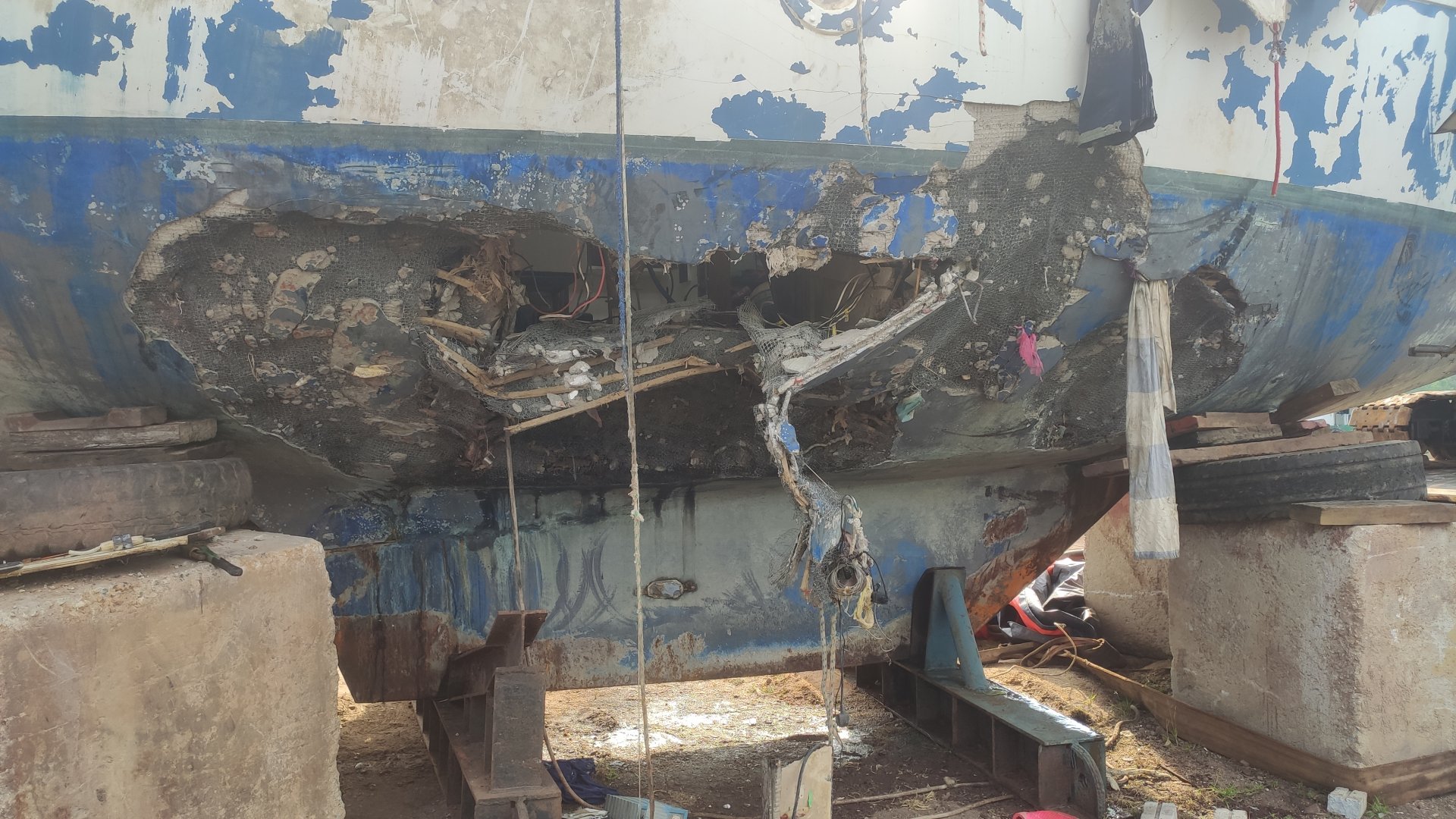
I own a 40ft ferrocement monohull built in New Zealand in 1984 by a company called Ferrocraft (no longer exists). It had a unlucky encounter with some rocks and the hull is badly damaged. The construction is unlike other ferro boats I've heard of. From inside to out, its concrete, steel rods, 2 layers of mesh stapled to wood laths, lath, 2 layers of mesh stapled to the other side, concrete. Laths run horizontal about 6 inches apart.
Overall hull thickness is 1.5 - 2 inches - this is below the waterline, I'm guessing above the waterline isn't so thick.

Is anyone familiar with this kind of construction and how to repair it? I'm trying to evaluate if it's worth attempting. It was a nice boat, but the interior is trashed, the prop shaft is bent, rudder is bent, boom was lost, and more.
IMG_20230515_170314.jpg

IMG_20230515_170942.jpg


IMG_20230515_172638.jpg


IMG_20230515_171116.jpg
 
Lucky it ain't on the bottom.

I've zero ferro experience, but I'd say goodbye. I'd always wonder about integrity of that area after repair in any heavy seas.

It is also about the value proposition.

What is is worth now. Salvage or 0.

What does a repair cost? Many thousands.

What is it worth in good shape? Not much..
 
+1 re Fallguy's thoughts above.
Assuming it is possible to fix the hull properly (is the damage on just the starboard side?) then you will still have to build a new interior, and replace all the parts that are broken / lost - it would probably be easier / cheaper / much less stressful in the long run to look for a second hand fibreglass boat of similar size for sale.
 
I have not seen this type of construction before, but the repairs are the same as for any other ferro hull. First you chip back the concrete until you are in an undamaged area, without any cracks in it and sound reinforcement. To this area you tie new reinforcement, wet out the concrete edge with an adhesion promoter and replaster everything. The only difference in your case is that you will have to add wooden slats. The plastering can be done in one or two stages, or even shot blasted if you take a mold from the other side of the boat.

The economics of repairing the hull are difficult to evaluate from half a planet away. Ferro is a labour intensive method that needs a knowledgeable and disciplined workforce. The first question is if good plasterers are available locally and if you can afford them. The second question has to do with everything else that needs rebuilding, interior, systems, etc. A floating hull without all the things that make it livable and sailable is at best 30% of the cost of the entire boat.

While you investigate the possibility of repairing the hull you can also investigate what it costs to build a new one in monolithic glass using the ferro hull as a mold. Transfer anything usable over to the new hull (could be the entire deck in one piece if it's not also ferro), and start the rest of the refit from there.
 
The only thing I can meaningfully add to that is a suggested change of mortar. I've done a fair bit of concrete repair work that was under water, or rather, below the water table. I used epoxy bonded mortar, which is mortar sand in epoxy, rather than in Portland cement. Massively stronger secondary bond. Not really fairable after it's cured though. Makes regular concrete look like dried bread.
 
Clean up the debris, put a big barn door in the hole, build some strong furniture for the interior, paint it up and donate it to a nearby junior school to encourage budding sailors :-)
 
Even if you could find a way to repair it and then put a couple of thousand hours into a repair,what would you have?I doubt that you would get insurance cover and its hard to imagine a future potential buyer giving you anything like the value of the materials you need to put into it,never mind compensating you for all that work.In this part of the world,"ownership" would imply some duty to deal with the wreckage responsibly and avoid environmental harm.Did a previous owner give you a really good deal just in order to dodge such an obligation?

The suggestion to donate it to a kids playground is excellent and if it can be sunk into the ground,to avoid the need for props,it could provide a lot of fun.
 
Not my original idea, I'm afraid.
It comes from over 30 years ago, this guy up in the mountains spent years building a ferro yacht.
He got it transferred in an expensive 4 hour trucking to the main wharf in Hobart, Tasmania, and hired a crane to lower it into the water as his friends watched.
The water flowed in through the voids as fast as it was lowered, until the crane driver called a stop as the weight got dangerous.
He was faced with the expense of either trucking it back, or paying tip fees.
Someone came up with the idea of making it a public playground addition.
It cost the council about the same amount of money to make it safe as the guy spent building it.
 
I have never seen wood being used as part of a core in a ferro build. I owned a ferro boat and did some major repairs on the deck. I would walk away from that. You will spend a lot of time and money trying to put that right, and i would say it is of questionable build. World is awash with cheap boats, and I would personally put time and effort into something else.
 
If it has no sentimental value, or is not a rare and valuable example of something, strip it of anything not totally damaged, canvas it to float for a few hours, and then turn it into an artificial reef near your secret fishing spot. Although it would still probably be cheaper and safer to just cut it up where it is, and dump it. It's not worth another lift fee really. In the future, if you did repair it, any potential buyer will see your photos of the damage, and run. You will be stuck with it, and its cost, and ongoing expense whether you want it or not. I'm sorry for your loss, either way.
 
Uninsurable!
Do you have any original plans and specs?
The wood in the structure’s core is quite unorthodox, makes me suspect that this was an amateur build.
 
I realize that this is an old thread and the boat in question probably ended up in a landfill long ago but i actually have some knowlege of the company, Ferrocraft Marine who built this boat as they built a steel truss frame pack for me for a Hartley Rorc 39 that i built back in the early 70s. They were a very active boatbuilding yard in the 1970's and built some very nice yachts indistinguishable from any other construction. I believe ( i could be wrong here) that the OP's boat was designed by the very well known kiwi designer, the late Laurie Davidson. The construction method on this particular design was definitely not conventional and i know of no other builder who built this way . It was also not Ferrocrafts typical build method. This particular design was i think their attempt at a production ferro boat and a number were built. It appears to have been rather successful when you consider that this particular boat was nearly 40 years old and' judging by the almost complete lack of rust on the armature and the wood stringers look to have been in excellent condition, no sign of any rot there. If it's the design i'm thinking of they were a very attractive modern boat of the era, not your average ferro yacht. Unfortunately, i have to agree with everyone else on this thread that it was probably not worth saving unless the owner had the basic skills to do the work himself. The materials to repair the hull itself would be very inexpensive but i'm sure a lot of other stuff would need replacing. Most other old boats of any other material would have suffered just as much damage and also not be worth repairing. Any ferro haters out there should look at these photos, the steel armature is in outstanding condition after nearly 40 years.
 
I realize that this is an old thread and the boat in question probably ended up in a landfill long ago but i actually have some knowlege of the company, Ferrocraft Marine who built this boat as they built a steel truss frame pack for me for a Hartley Rorc 39 that i built back in the early 70s. They were a very active boatbuilding yard in the 1970's and built some very nice yachts indistinguishable from any other construction. I believe ( i could be wrong here) that the OP's boat was designed by the very well known kiwi designer, the late Laurie Davidson. The construction method on this particular design was definitely not conventional and i know of no other builder who built this way . It was also not Ferrocrafts typical build method. This particular design was i think their attempt at a production ferro boat and a number were built. It appears to have been rather successful when you consider that this particular boat was nearly 40 years old and' judging by the almost complete lack of rust on the armature and the wood stringers look to have been in excellent condition, no sign of any rot there. If it's the design i'm thinking of they were a very attractive modern boat of the era, not your average ferro yacht. Unfortunately, i have to agree with everyone else on this thread that it was probably not worth saving unless the owner had the basic skills to do the work himself. The materials to repair the hull itself would be very inexpensive but i'm sure a lot of other stuff would need replacing. Most other old boats of any other material would have suffered just as much damage and also not be worth repairing. Any ferro haters out there should look at these photos, the steel armature is in outstanding condition after nearly 40 years.

Hi Steve

re your post of 17 years ago.

The yacht you speak of is Waiata II... Currently with me in Sydney, just back from a month in QLD.
We have had her for 4 years, previously owned by G Simpson for some 52 years. She remain in fine condition and a formidable passage maker.
Built by Snow Waters for himself, designed by Alan Mummery.

Regards

Richard
 

Attachments

  • New jib take 1 (003).jpg
    New jib take 1 (003).jpg
    116.7 KB · Views: 45
  • f2047542-c29d-41bb-bb74-908f13f30bae.jpg
    f2047542-c29d-41bb-bb74-908f13f30bae.jpg
    330.8 KB · Views: 54
Forum posts represent the experience, opinion, and view of individual users. Boat Design Net does not necessarily endorse nor share the view of each individual post.
When making any potentially dangerous or financial decision, always employ and consult appropriate professionals. Your circumstances or experience may be different.

  • Back
    Top